
How Commercial HVAC Maintenance Helps South Florida Businesses Stay Comfortable
Commercial air conditioning failures create a different kind of disruption than residential problems. Employees may become uncomfortable, customers may leave sooner, temperature-sensitive spaces can become difficult to manage, and business operations may be interrupted while emergency repairs are arranged.
Planned commercial HVAC maintenance is designed to identify developing issues before they become obvious failures and to keep equipment operating as consistently as possible under heavy use.
Step 1: Review System Operation and Recent Problems
A useful maintenance visit starts with context. Has a particular zone been warm? Has the equipment become noisier? Are thermostats holding their settings? Has a unit required repeated resets?
This information helps the technician focus on changes that may not be obvious during a brief inspection.
Step 2: Inspect Filters and Airflow
Commercial systems need adequate airflow just like residential systems. Dirty filters, restricted returns, blower problems, dirty coils, or duct issues can reduce performance.
Filter condition and airflow are checked because problems here can affect comfort, coil temperatures, energy use, and equipment reliability.
Step 3: Check Coils and Drainage
Indoor and outdoor coils need clear heat-transfer surfaces. Condensate drains also need to move water away from the system reliably.
A blocked drain can create shutdowns or water problems. Dirty coils may contribute to longer run times and reduced capacity. Maintenance gives technicians a chance to identify these conditions before they create a service interruption.
If your business needs planned commercial HVAC service, call Air Conditioning Inc at 561-880-4515 to schedule maintenance in South Florida.
Step 4: Inspect Electrical Components
Commercial cooling equipment depends on contactors, capacitors, wiring, connections, relays, motors, and controls. Heat, vibration, age, and heavy use can affect these components over time.
A maintenance visit may include checking electrical condition and operation so developing issues can be addressed before they become no-start failures.
Step 5: Evaluate Refrigeration Performance
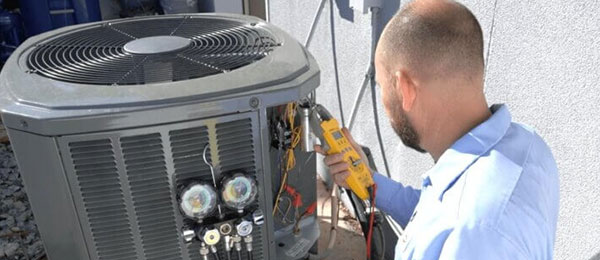
The technician can assess operating temperatures and pressures where appropriate to determine whether the refrigeration cycle is functioning normally. This helps identify conditions that may reduce cooling capacity or stress the equipment.
Refrigerant should not routinely disappear from a sealed system, so evidence of low charge deserves diagnosis rather than repeated topping off.
Step 6: Verify Thermostats, Zones, and Controls
Commercial buildings may have multiple thermostats or zones serving spaces with different loads and schedules. Control problems can waste energy or create comfort complaints even when the mechanical equipment is capable of cooling properly.
Verifying thermostat operation and control response helps ensure that the system is running when and where it should.
Step 7: Document Findings and Prioritize Recommendations
Maintenance is most useful when the business receives clear information about what was found. Some items may require immediate attention, while others can be monitored or planned for future service.
This allows owners and managers to make decisions before a component fails during operating hours.
Build HVAC Maintenance Into Business Planning
No maintenance program can guarantee that equipment will never fail, but routine inspection can reduce avoidable surprises and provide a clearer picture of system condition.
Call Air Conditioning Inc at 561-880-4515 to discuss commercial HVAC maintenance for your South Florida property. Planned service can help you identify wear, maintain airflow and heat transfer, and schedule repairs with less disruption to day-to-day operations.
(561) 880-4515
Submit your review | |